
20 April 2026

Do you remember your journey to work? Do you really remember your journey to work?
It’s a simple question, but one that can become surprisingly important in the context of insurance and claims, particularly when trying to recall the details of an incident on the road.
Chances are, you don’t, unless something different happened along the way; a sudden road closure, an accident, or perhaps spotting something curious or out of the norm. Without these moments, the daily commute often fades into the background, lost in routine.
Why don’t we remember our journey to work?
Monotony, procedural memory and familiarity of route.
We all know what monotony is, it’s the repetitiveness of doing the same thing every day. Over time, our brains stop paying attention to details that don’t change.
Then there is procedural memory. According to VeryWellMind1:
“Procedural memory, also called implicit memory, is a type of long-term memory involved in the performance of different actions and skills. Essentially, it is the memory of how to do certain things. Riding a bike, tying your shoes, and cooking an omelette without a recipe are all examples of procedural memories.”

In other words, once you’ve done something enough times, your brain switches to autopilot. The journey becomes automatic and forgettable.
Finally, there’s familiarity of route. The more often you travel the same route, the less your brain needs to actively process it. You stop seeing, stop remembering the journey, even though you’re moving through it.
This is something we often see reflected in insurance claims. When incidents occur during routine journeys, details can be harder to recall because the drive itself felt automatic.
However, not all commutes are forgettable, certain disruptions can snap us out of autopilot.
Reasons why we remember the journey
Roadworks or diversions – Being forced into a different route breaks the routine and makes the trip more noticeable
Unusually high volumes of traffic – A longer, more frustrating commute sticks in the mind (and gives us something to moan about at work!)
Change in weather – Such as sudden heavy rain, hail, snow, or a bright low winter sun can make the journey feel different enough to remember
Accident – Driving past or being involved in an accident is a noteworthy event which will grab our attention
Half-term or school holidays – When the roads are quieter which can make the journey stand out for its ease
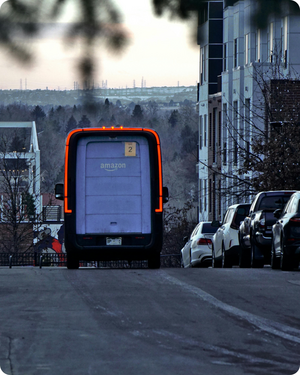
In the context of claims, these moments often become key reference points, helping individuals piece together what happened and when.
In case you’re wondering why – Where did the Amazon lorry go? A colleague mentioned driving behind one for a significant portion of their commute, only to realise it was no longer in front of them without consciously noticing it had turned off the road.
This is a perfect example of how even the most noticeable things can slip out of our memory, especially during routine journeys.
1https://www.verywellmind.com/what-is-procedural-memory-2795478