
26 October 2026
For many years, workplace air quality was viewed primarily as a facilities management issue. As long as a building did not feel stuffy and obvious contaminants were controlled, few organisations gave it significant attention. That position has changed considerably.
Today, air quality sits at the intersection of employee wellbeing, health and safety compliance, environmental performance and productivity. Increased awareness of respiratory health, changing employee expectations and a greater focus on workplace conditions mean organisations are under more scrutiny over the air their people breathe.

For risk managers and business leaders, workplace air quality is also about more than well-known hazards such as asbestos fibres and silica. Everyday airborne dust, from flour and construction dust to tyre dust, can present risks across a wide range of workplaces. Understanding and managing those risks is becoming an increasingly important part of workplace health and safety.
The legal framework in the UK
Unlike water quality or outdoor pollution, there is no single piece of UK legislation dedicated solely to workplace indoor air quality. Instead, employers’ duties sit across several areas of health and safety legislation and guidance.
Health and Safety at Work etc. Act 1974
The foundation of workplace health and safety law remains the Health and Safety at Work etc. Act 1974, which requires employers to ensure, so far as is reasonably practicable, the health, safety and welfare of employees. This overarching duty includes protecting workers from harmful airborne contaminants and maintaining a healthy working environment.
Workplace (Health, Safety and Welfare) Regulations 1992
Regulation 6 states that every enclosed workplace must be ventilated by a sufficient quantity of fresh or purified air. Employers must ensure ventilation systems are effective and suitable for the activities taking place within the building.
The HSE advises that fresh air supply rates should not normally fall below 5 to 8 litres per second per occupant, with 10 litres per second often regarded as good practice in many workplaces.

COSHH Regulations 2002
Where employees may be exposed to hazardous substances such as welding fumes, silica dust, flour dust, construction dust, solvents, diesel exhaust emissions, cleaning chemicals or other airborne contaminants, the Control of Substances Hazardous to Health (COSHH) Regulations apply.
Employers must assess the risks, put appropriate controls in place, monitor exposure where necessary and maintain appropriate records.
Management of Health and Safety at Work Regulations 1999
These regulations require employers to undertake suitable and sufficient risk assessments. Poor ventilation, indoor pollutants, mould growth and exposure to hazardous airborne substances should all be considered within workplace risk assessments where relevant.
Why the issue has moved up the agenda
A number of factors have brought greater attention to workplace air quality, but perhaps the most significant was the pandemic. It brought an unprecedented focus on airborne transmission and ventilation and, with it, a wider awareness of the quality of the air within workplaces. There is also greater recognition of the impact of occupational ill health. Airborne contaminants can contribute to respiratory diseases, occupational asthma, chronic lung conditions and some occupational cancers.
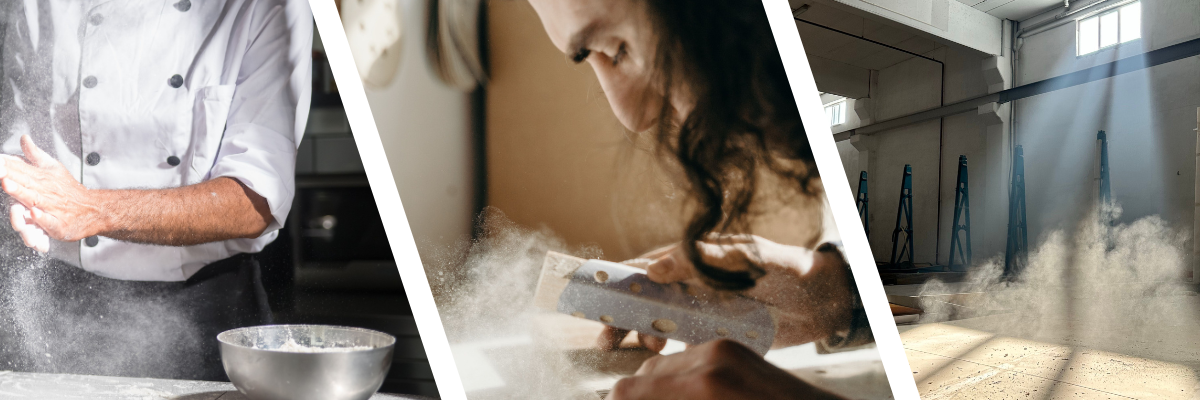
The risks vary considerably between workplaces. They can include flour dust in food production, dust generated by construction activities, welding fumes or tyre dust at indoor go-kart tracks. Poor ventilation, volatile organic compounds (VOCs), mould and external pollution entering buildings can also affect indoor air quality.
Changes to the way buildings are designed and used are adding another dimension. The drive for greater energy efficiency can mean that achieving sufficient fresh air exchange increasingly depends on effective ventilation systems. At the same time, employees have greater expectations of the environments in which they work.
For employers, the important point is understanding the particular risks within their own workplaces and knowing whether the controls they have in place are effective.
What should employers be monitoring?
While legal compliance focuses on managing risks rather than achieving a single indoor air quality figure, many organisations are adopting more proactive monitoring strategies.
Depending on the workplace and the activities taking place, common indicators can include:
Carbon dioxide (CO₂) as a ventilation performance indicator
Particulate matter (PM2.5 and PM10)
Volatile organic compounds (VOCs)
Temperature
Relative humidity
Carbon monoxide where relevant
Specific occupational contaminants and dusts covered by COSHH
Monitoring can help organisations identify problems before they develop into employee concerns or more serious health and safety issues. It can also provide evidence that existing controls are working as intended.
CO₂ monitoring, for example, can provide a useful indication of ventilation performance in occupied spaces. However, employers also need to consider the specific contaminants associated with their activities, particularly where COSHH applies.
What could change in the future?
The UK does not currently have a single legally enforceable indoor air quality standard covering the full range of pollutants that may be present in workplaces.
Parliamentary research and wider public health discussions have highlighted indoor air quality as an area receiving increasing attention. Whether or not this leads to further regulation, businesses should be aware that expectations around monitoring, managing and demonstrating good indoor air quality may continue to develop.
8 practical actions for employers
Risk managers looking to strengthen their approach to workplace air quality should consider:
1. Reviewing ventilation arrangements across occupied spaces.
2. Including air quality and airborne dust within health and safety risk assessments where relevant.
3. Ensuring HVAC systems are appropriately inspected and maintained.
4. Reviewing COSHH assessments for airborne contaminants and dusts.
5. Investigating employee concerns or complaints relating to air quality.
6. Using CO₂ monitoring to help identify poorly ventilated areas.
7. Considering broader indoor air quality monitoring in higher-risk environments.
8. Recording actions and monitoring data to help demonstrate that appropriate controls are in place.
Conclusion
Workplace air quality is no longer simply a facilities issue. Employers have long had responsibilities around ventilation and exposure to hazardous substances, but greater awareness of respiratory health and airborne risks has brought these issues into sharper focus.
For risk managers, the question is not simply whether a workplace feels well ventilated, but whether the organisation understands the airborne risks that exist and can demonstrate that appropriate controls are working.
Taking a proactive approach can help businesses protect employee health, meet their legal responsibilities and address potential problems before they become more serious.

Chris Moore | Tech IOSH | AIFSM | L3CertFRA
Risk Management Development Director
Sources:
1. Monitoring strategies for toxic substances - HSE
2. The Workplace (Health, Safety and Welfare) Regulations 1992
3. Assessing the risk of poor ventilation - Ventilation in the workplace
4. Guidance on air pollution and health
This article is provided for general information purposes only and reflects information available at the date of publication. It does not constitute legal, regulatory, health and safety, or other professional advice. Organisations should seek appropriate professional advice in relation to their specific circumstances.